Unlock your potential and boost productivity with a vertical assistant. Discover how this innovative approach maximizes efficiency in the modern workspace.
What is a Vertical Assistant?
In the modern digital age, businesses are continually seeking tools and strategies to enhance productivity and streamline operations. Among the most promising innovations in recent years is the vertical assistant. Unlike traditional assistants or general-purpose AI solutions, a vertical assistant is a specialized form of automation designed to cater specifically to the needs of a particular industry or business function. It is tailored to perform a set of tasks with high efficiency, operating within a defined vertical, such as healthcare, finance, or customer service.
The concept of a vertical assistant is rooted in the idea that a one-size-fits-all approach to automation often falls short of meeting the nuanced requirements of different industries. Vertical assistants are built with a deep understanding of the specific workflows, terminology, and challenges that characterize their designated sectors. This specialization allows them to provide more relevant and accurate support, ultimately leading to better outcomes and higher satisfaction for users.
A vertical assistant leverages advanced technologies such as artificial intelligence, machine learning, and natural language processing to perform its duties. By focusing on a particular industry, it can offer insights and perform tasks that a general-purpose assistant might miss. This targeted functionality is what makes vertical assistants so powerful and valuable in today’s fast-paced business environment, where precision and expertise are paramount.
Key Features of VA
VA come equipped with a range of features that enable them to deliver exceptional value within their specific domains. One of the primary features is their ability to understand and process industry-specific language and terminology. This linguistic precision ensures that communication is clear and effective, reducing the likelihood of errors and misunderstandings. For instance, a vertical assistant in the medical field can accurately interpret patient records and medical jargon, facilitating better patient care and operational efficiency.
Another key feature of VA is their capacity for seamless integration with existing systems and workflows. These assistants are designed to work in tandem with the software and processes already in place within an organization. This compatibility minimizes disruptions and allows businesses to harness the benefits of automation without overhauling their entire infrastructure. For example, a vertical assistant in the finance sector can integrate with accounting software to automate routine tasks such as invoice processing and financial reporting.
VA also excel in data analysis and decision-making support. Equipped with advanced algorithms, they can sift through vast amounts of data to identify patterns, trends, and insights that may not be immediately apparent to human analysts. This capability is particularly valuable in industries where data-driven decision-making is crucial. In the retail sector, for example, a vertical assistant can analyze sales data to forecast demand, optimize inventory, and tailor marketing strategies to maximize revenue.
Benefits of Using Vertical Assistants for Businesses
The adoption of VA offers numerous benefits for businesses, starting with increased efficiency and productivity. By automating routine and time-consuming tasks, VA free up human employees to focus on higher-value activities that require creativity, critical thinking, and interpersonal skills. This shift not only enhances overall productivity but also boosts employee morale and job satisfaction, as workers can engage in more meaningful and fulfilling work.
Cost savings are another significant advantage of VA. Automation reduces the need for manual labor, which can lead to substantial cost reductions in the long run. Moreover, vertical assistants minimize errors and improve accuracy in task execution, further contributing to cost savings by reducing the need for rework and mitigating the risk of costly mistakes. For instance, in the logistics industry, a vertical assistant can optimize route planning and inventory management, leading to lower operational costs and improved service delivery.
VA also enhance the quality of service provided to customers. With their specialized knowledge and capabilities, these assistants can offer more personalized and responsive support, leading to higher customer satisfaction and loyalty. In the customer service sector, for example, a vertical assistant can handle inquiries and resolve issues more efficiently, ensuring that customers receive prompt and accurate responses. This level of service not only strengthens customer relationships but also enhances the brand’s reputation and competitiveness in the market.
How Vertical Assistants Improve Efficiency
Vertical assistants are designed to address the specific efficiency challenges faced by their respective industries. By leveraging their specialized knowledge and capabilities, they streamline workflows and optimize operations in several ways. One of the primary ways they improve efficiency is by automating repetitive and time-consuming tasks. These tasks, which often involve data entry, scheduling, and routine communications, can be handled swiftly and accurately by VA, freeing up human workers to focus on more strategic activities.
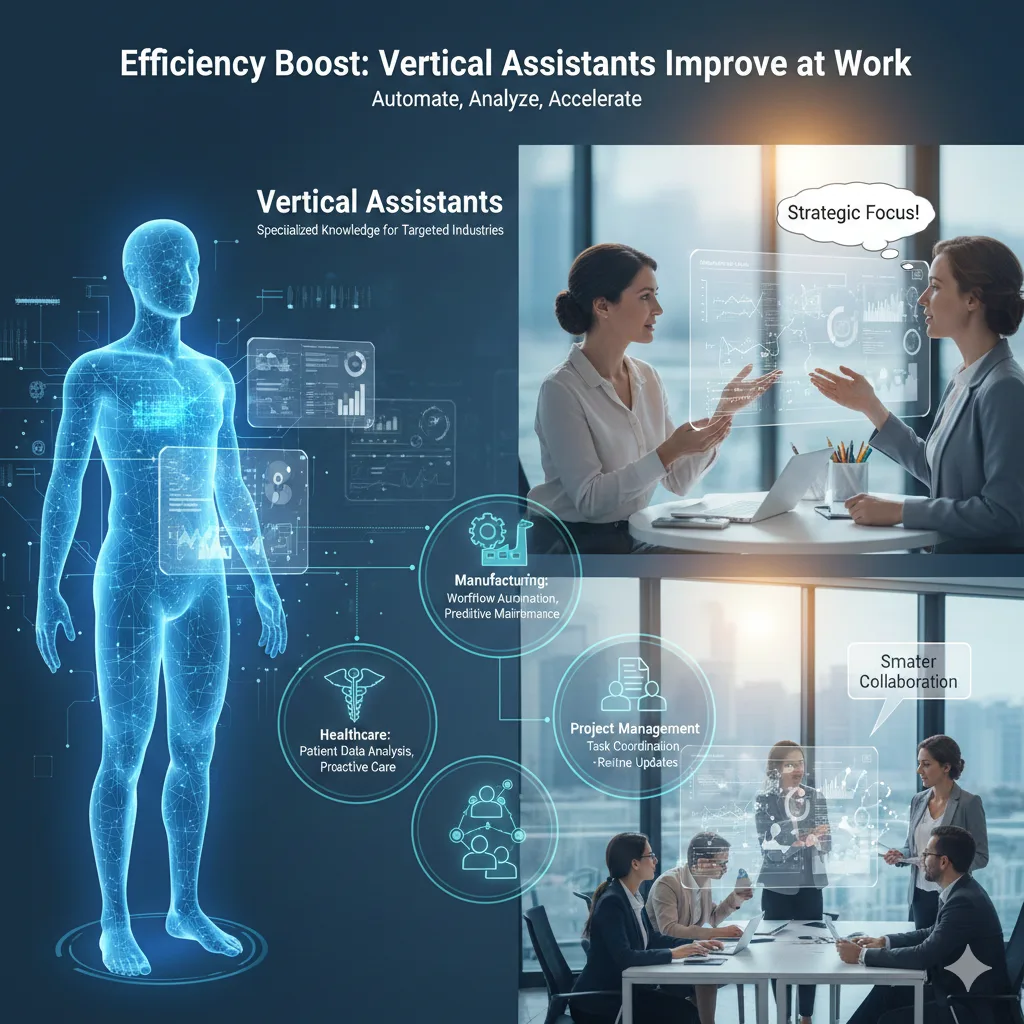
In addition to task automation, VA enhance efficiency through intelligent data management and analysis. They can collect, organize, and analyze large volumes of data in real-time, providing businesses with actionable insights that drive informed decision-making. For example, in the healthcare industry, a vertical assistant can analyze patient data to identify trends and predict potential health issues, enabling proactive care and improving patient outcomes. This data-driven approach not only boosts operational efficiency but also enhances the quality of service provided.
Vertical assistants also contribute to efficiency by facilitating better communication and collaboration within organizations. They can serve as central hubs for information sharing, ensuring that all team members have access to the latest data and updates. This transparency and accessibility reduce the likelihood of miscommunication and duplication of efforts, leading to smoother and more efficient workflows. In the project management domain, for instance, a vertical assistant can coordinate tasks, track progress, and provide real-time updates, ensuring that projects stay on track and are completed on time.
Industries That Benefit Most from Vertical Assistants
While vertical assistants offer valuable support across various sectors, certain industries stand to benefit the most from their specialized capabilities. The healthcare industry is one such sector, where the complexity and critical nature of tasks demand precision and efficiency. VA in healthcare can manage patient records, schedule appointments, facilitate telemedicine consultations, and provide decision support to medical professionals, ultimately improving patient care and operational efficiency.
The finance and banking industry also reaps significant benefits from VA. These assistants can automate routine tasks such as transaction processing, compliance checks, and financial reporting, reducing the workload on human employees and minimizing the risk of errors. Additionally, VA can analyze financial data to detect fraud, assess credit risk, and provide investment insights, enhancing the overall efficiency and security of financial operations.
Retail is another industry where vertical assistants can make a substantial impact. With their ability to analyze sales data, manage inventory, and personalize customer interactions, vertical assistants help retailers optimize their operations and enhance the shopping experience. For example, a vertical assistant can forecast demand for products, ensuring that inventory levels are optimized and stockouts are minimized. Additionally, by providing personalized recommendations and targeted marketing campaigns, VA can boost customer engagement and drive sales.
Choosing the Right Vertical Assistant for Your Needs
Selecting the right vertical assistant for your business involves careful consideration of several factors to ensure that the chosen solution aligns with your specific needs and goals. One of the first steps in this process is to identify the key tasks and challenges within your industry that a vertical assistant can address. By understanding your unique requirements, you can narrow down the options and focus on assistants that offer the most relevant features and capabilities.
It is also important to evaluate the technology and integration capabilities of the VA under consideration. Ensure that the assistant can seamlessly integrate with your existing systems and workflows, minimizing disruptions and facilitating a smooth transition to automation. Compatibility with your current software and tools is crucial for maximizing the benefits of the vertical assistant and ensuring that it complements your operations rather than complicating them.
Another critical factor to consider is the level of customization and scalability offered by the vertical assistant. Your business needs and operations are likely to evolve over time, so it is essential to choose an assistant that can adapt to these changes. Look for solutions that offer flexible customization options and can scale to accommodate your growing requirements. This adaptability will ensure that the vertical assistant remains a valuable asset as your business expands and evolves.
Implementing a Vertical Assistant in Your Workflow
Successfully implementing a vertical assistant in your workflow requires a strategic approach to ensure that the transition is smooth and that the benefits are fully realized. The first step in this process is to conduct a thorough assessment of your current workflows and identify the areas where the vertical assistant can have the most significant impact. This assessment will help you prioritize tasks for automation and set clear objectives for the implementation.
Once you have identified the key areas for automation, it is essential to involve your team in the implementation process. Communicate the benefits of the vertical assistant to your employees and provide training to ensure that they are comfortable using the new tool. Address any concerns or resistance to change by highlighting how the assistant will enhance their work and reduce the burden of routine tasks. This buy-in from your team is crucial for a successful implementation.
Monitoring and evaluation are also critical components of the implementation process. Set measurable goals and regularly assess the performance of the vertical assistant to ensure that it is meeting your objectives. Gather feedback from your team and make any necessary adjustments to optimize the assistant’s functionality. By continuously monitoring and refining the implementation, you can maximize the benefits of the vertical assistant and ensure that it contributes to sustained efficiency improvements.

Case Studies: Success Stories with Vertical Assistants
Several businesses across different industries have successfully implemented vertical assistants and reaped significant benefits. One notable example is a leading healthcare provider that integrated a vertical assistant to manage patient appointments and records. The assistant streamlined the scheduling process, reduced wait times, and improved patient satisfaction. Additionally, it provided valuable insights into patient data, enabling proactive care and better health outcomes.
In the financial sector, a major bank adopted a vertical assistant to automate compliance checks and transaction processing. The assistant reduced the time and effort required for these tasks, allowing employees to focus on more strategic activities. It also enhanced the accuracy of compliance checks, reducing the risk of regulatory issues and improving overall operational efficiency. The bank reported significant cost savings and improved service quality as a result of the implementation.
A retail giant implemented a vertical assistant to optimize inventory management and personalize customer interactions. The assistant analyzed sales data to forecast demand and ensure that inventory levels were optimized, reducing stockouts and excess inventory. It also provided personalized product recommendations and targeted marketing campaigns, boosting customer engagement and sales. The retailer experienced increased revenue and improved customer loyalty following the implementation.
Conclusion and Future of Vertical Assistants
The power of vertical assistants in unlocking efficiency and boosting productivity is evident across various industries. By leveraging their specialized knowledge and capabilities, these assistants streamline workflows, enhance decision-making, and improve service quality. Businesses that adopt vertical assistants can enjoy significant benefits, including cost savings, increased productivity, and higher customer satisfaction.
As technology continues to evolve, the capabilities of vertical assistants are likely to expand further. Advances in artificial intelligence, machine learning, and natural language processing will enable even greater levels of automation and intelligence. Future VA will be able to handle more complex tasks, provide deeper insights, and offer even more personalized support. This ongoing innovation will continue to drive efficiency improvements and reshape the way businesses operate.
In conclusion, the adoption of vertical assistants represents a powerful strategy for businesses looking to enhance efficiency and stay competitive in the modern marketplace. By choosing the right vertical assistant and implementing it effectively, organizations can unlock their full potential and achieve sustained success. The future of vertical assistants is bright, and businesses that embrace this innovative approach will be well-positioned to thrive in the years to come.
What is a vertical assistant?
A vertical assistant is a specialized AI-powered assistant designed for a specific industry or business function. Unlike general-purpose assistants, it understands industry-specific workflows, terminology, and challenges, allowing it to deliver more accurate and relevant support.
How is a VA different from a general AI assistant?
A general AI assistant works across many tasks and industries, while a vertical assistant is tailored for one specific domain such as healthcare, finance, retail, or customer service. This specialization results in better accuracy, efficiency, and decision-making within that industry.
What tasks can a VA automate?
Vertical assistants can automate tasks such as data entry, scheduling, reporting, customer support, compliance checks, inventory management, and analytics—depending on the industry they are designed for.
Which industries benefit the most from VA?
Industries with complex workflows and data-driven operations benefit the most, including healthcare, finance and banking, retail, logistics, customer service, and project management.
Are VA expensive to implement?
The cost varies based on features, customization, and scale. However, many businesses see a strong return on investment due to reduced labor costs, fewer errors, and improved productivity over time.
Can a vertical assistant integrate with existing software?
Yes. Most vertical assistants are designed to integrate seamlessly with existing systems such as CRMs like Hubspot, ERPs, accounting software, and project management tools, minimizing disruption to current workflows.
What is the future of VA?
The future of VA lies in deeper AI integration, improved personalization, and the ability to handle more complex decision-making tasks. As AI technology advances, vertical assistants will become even more intelligent, proactive, and essential to modern business operations.