
Unlock the potential of your website with AI-driven design techniques. Discover how artificial intelligence can elevate user experience and transform your online presence.
In today’s digital-first world, a website is no longer just about looks – it’s about speed, personalization, automation, and measurable results.
Our AI Website Design services combine modern design principles with artificial intelligence to create high-performing websites that adapt to user behavior, improve conversions, and scale globally.
Whether you’re a startup, SaaS company, real estate brand, or ecommerce business, AI-powered web design helps you launch faster, convert better, and grow smarter.
Unlocking the potential of your website with AI-driven design techniques is not just a possibility; it’s a reality. Artificial intelligence is transforming the landscape of web design, bringing forth innovative solutions that elevate user experience and enhance online presence. As we delve into the power of AI in website design, you will discover the myriad ways in which AI-driven technologies can revolutionize the way websites are created and maintained.
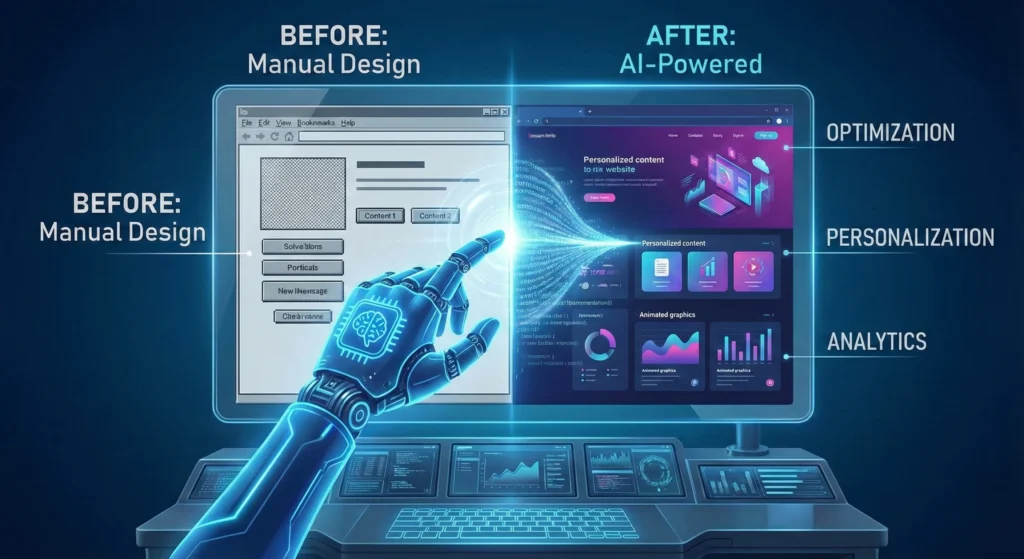

Artificial intelligence has become a game-changer in the realm of web design. Traditionally, website creation required extensive coding knowledge and manual effort, but AI has introduced automation and intelligent decision-making into the mix. AI algorithms can analyze vast amounts of data, learning from user behavior and preferences to create intuitive and engaging websites. This shift towards AI-driven design is reducing human error, speeding up the development process, and providing more personalized user experiences.
One of the key ways AI is revolutionizing web design is through the automation of routine tasks. Website builders powered by AI can generate layouts, select color schemes, and even write content based on predefined parameters. This not only saves time but also ensures consistency across the site. Designers can now focus on more creative aspects of web development, allowing AI to handle the repetitive and time-consuming tasks.
AI is also enhancing the interactivity of websites. Through machine learning and natural language processing, AI can create chatbots and virtual assistants that provide real-time support to users. These AI-driven tools can answer questions, guide users through the site, and even make recommendations based on user preferences. This level of interactivity was previously unattainable and is now becoming a standard feature in modern web design.
Another significant benefit is the enhancement of search engine optimization (SEO). AI-driven tools can analyze keywords, search patterns, and trends to optimize content for better search engine rankings. These tools can also provide insights into competitor strategies, helping websites stay ahead in the digital landscape. By leveraging AI for SEO, businesses can increase their online visibility and attract more organic traffic.
AI also contributes to improved accessibility and usability. AI-powered design tools can create responsive websites that adapt to different devices and screen sizes. This ensures that users have a seamless experience regardless of the device they are using. Additionally, AI can assist in making websites more accessible to individuals with disabilities by providing features such as voice commands and text-to-speech functionalities. This inclusivity is crucial in reaching a broader audience and enhancing user satisfaction.
The rise of AI has led to the development of various tools and technologies that designers can leverage to create stunning websites. One of the most popular tools is AI-driven website builders. Platforms like Wix and Squarespace use AI to simplify the web design process, enabling users to create professional-looking websites without any coding knowledge. These builders can generate templates, suggest design elements, and even optimize the site for SEO automatically.
Another valuable AI tool for designers is Adobe Sensei. Integrated into Adobe’s suite of creative software, Sensei uses machine learning to enhance design capabilities. It can automate repetitive tasks, provide intelligent suggestions, and analyze design elements to improve overall aesthetics. Designers can use Sensei to streamline their workflow, allowing them to focus on creativity and innovation.
AI-powered analytics tools are also essential for modern web design. Tools like Google Analytics and Hotjar use AI to gather and interpret user data, providing insights into user behavior and preferences. These tools can identify patterns and trends, helping designers make informed decisions about website layout, content, and functionality. By understanding how users interact with a site, designers can create more engaging and intuitive experiences.
User experience (UX) is a critical aspect of web design, and AI is playing a pivotal role in enhancing it. One of the ways AI improves UX is through predictive analytics. By analyzing user data, AI can anticipate user needs and preferences, providing personalized content and recommendations. This proactive approach ensures that users find what they are looking for quickly and effortlessly, leading to higher satisfaction and retention rates.
AI is also transforming the way websites interact with users. Chatbots and virtual assistants powered by AI can provide instant support, answer queries, and guide users through the website. These tools use natural language processing to understand and respond to user inputs, creating a more interactive and engaging experience. Users no longer have to wait for human assistance, as AI-driven tools can handle multiple queries simultaneously and provide accurate responses.
Another significant contribution of AI to UX is the optimization of website performance. AI algorithms can analyze site speed, load times, and other performance metrics to identify areas for improvement. By optimizing these elements, AI ensures that users have a smooth and seamless experience, reducing bounce rates and increasing engagement. Additionally, AI can monitor website security, detecting and mitigating potential threats to ensure a safe browsing environment.
Responsive design is essential in today’s digital landscape, as users access websites from various devices with different screen sizes. AI is revolutionizing responsive design by enabling websites to adapt dynamically to user preferences and device specifications. AI-powered tools can analyze user data and automatically adjust the layout, images, and content to provide an optimal viewing experience on any device.
One of the key advantages of AI in responsive design is its ability to predict and adapt to user behavior. AI algorithms can learn from user interactions, identifying patterns and preferences that inform design decisions. For example, if a significant portion of users accesses a website from mobile devices, AI can prioritize mobile-friendly design elements, ensuring that the site is easy to navigate and visually appealing on smaller screens.
AI also contributes to the creation of fluid and adaptive layouts. Traditional responsive design relies on predefined breakpoints to adjust layouts for different screen sizes. However, AI can create more flexible designs that adapt in real-time based on user interactions and device specifications. This dynamic approach ensures that users have a consistent and enjoyable experience, regardless of how they access the site.
Several websites have successfully integrated AI-driven design techniques, showcasing the transformative power of artificial intelligence in web development. One notable example is The Grid, an AI-powered website builder that uses machine learning to create custom websites. The Grid’s AI, named Molly, can design layouts, choose color schemes, and optimize content based on user preferences. This innovative approach has allowed users to create visually stunning and highly functional websites with minimal effort.
Another successful case study is Netflix. The streaming giant uses AI to personalize user experiences, recommending content based on viewing history and preferences. Netflix’s AI algorithms analyze vast amounts of data to understand user behavior, providing tailored suggestions that keep users engaged. This level of personalization has contributed to Netflix’s success, as users feel that the platform understands their tastes and preferences.
Spotify is another example of a website that leverages AI for enhanced user experience. The music streaming service uses AI to curate playlists and recommend songs based on user listening habits. Spotify’s AI algorithms analyze user data to identify patterns and preferences, creating personalized music experiences that keep users coming back. This level of customization has made Spotify a leader in the music streaming industry.
While AI offers numerous benefits in web design, it is not without its challenges and limitations. One of the primary challenges is the reliance on data. AI algorithms require vast amounts of data to learn and make accurate predictions. If the data is incomplete or biased, the AI’s performance can be compromised, leading to suboptimal design decisions. Ensuring data quality and integrity is crucial for effective AI-driven web design.
Another limitation is the lack of creativity in AI-generated designs. While AI can automate routine tasks and optimize content, it may not possess the creative flair that human designers bring to the table. AI-generated designs can sometimes feel generic and lack the unique touch that sets a website apart. Balancing AI automation with human creativity is essential to create engaging and distinctive websites.
The ethical implications of AI in web design also pose challenges. AI algorithms can inadvertently perpetuate biases, leading to discriminatory design decisions. For example, if AI is trained on biased data, it may create websites that favor certain groups over others. Addressing these ethical concerns requires careful consideration and the implementation of fairness and inclusivity in AI training processes.
The future of AI in website design is promising, with several emerging trends set to revolutionize the industry further. One such trend is the integration of AI with augmented reality (AR) and virtual reality (VR). AI-powered AR and VR can create immersive and interactive web experiences, allowing users to engage with websites in new and exciting ways. This technology has the potential to transform e-commerce, education, and entertainment websites.
Another trend is the use of AI for voice-enabled web design. As voice assistants like Siri and Alexa become more prevalent, websites will need to adapt to voice commands and interactions. AI can analyze voice inputs, providing accurate responses and guiding users through the site. Voice-enabled web design will enhance accessibility and usability, making websites more inclusive and user-friendly.
AI-driven design collaboration is also an emerging trend. AI tools can facilitate collaboration between designers, developers, and other stakeholders, streamlining the design process. These tools can provide real-time feedback, suggest design elements, and automate routine tasks, allowing teams to work more efficiently and creatively. The future of AI in web design will see more integrated and collaborative approaches, leading to innovative and high-quality websites.
Embracing AI in web design is no longer a choice but a necessity for staying competitive in the digital landscape. AI-driven design techniques offer numerous benefits, from personalized user experiences to enhanced SEO and accessibility. By leveraging AI tools and technologies, designers can create stunning and highly functional websites that cater to user preferences and behaviors.
While there are challenges and limitations to consider, the future of AI in web design is promising. Emerging trends such as AR, VR, voice-enabled design, and collaborative tools are set to revolutionize the industry further. As businesses and designers continue to explore the potential of AI, the digital landscape will become more innovative and user-centric.
In conclusion, AI is transforming web design, elevating user experience, and enhancing online presence. By embracing AI-driven design techniques, businesses can gain a competitive edge, creating websites that stand out and engage users. The power of AI in website design is undeniable, and its potential is only just beginning to unfold.
AI website design uses artificial intelligence to assist with layout creation, UX optimization, content structuring, personalization, and performance improvements. It helps build smarter, data-driven websites that convert better.
Traditional web design relies on manual decisions, while AI website design uses data and user behavior to optimize layouts, content, and performance automatically, resulting in faster and more effective websites.
Yes. AI website design improves SEO by enhancing site structure, page speed, mobile usability, internal linking, and user engagement — all key ranking factors for search engines.
No. AI supports the design process, but final layouts, branding, and user experience are customized by professional designers to ensure a unique and high-quality website.
Absolutely. AI analyzes user behavior, tests layouts, and optimizes CTAs, helping improve engagement, lead generation, and conversion rates over time.
Yes. AI website design helps small businesses launch faster, reduce costs, and compete with larger brands by using smart automation and conversion-focused design.
Yes. AI website design works perfectly with WordPress website Development, allowing easy content management while adding AI-powered optimization, personalization, and automation features.
Yes. AI websites are built using modern frameworks and security best practices, making them scalable, secure, and ready to handle growth and increased traffic.
No. AI enhances the work of designers and developers by automating repetitive tasks, while creativity, strategy, and technical decisions remain human-led.
AI website design is ideal for startups, SaaS companies, ecommerce brands, real estate businesses, and any organization looking for a high-performance, future-ready website.